
THE CREAT8VE JOURNAL · BRANDING
5 Branding Myths That Could Be Costing You Clients
Five common branding mistakes and practical ways for service founders to clarify their offer, build trust and help the right clients choose them.
A referral gets a potential client to your website. Then they have to work out what you do, whether you understand their problem, and why they should talk to you. If your homepage says “solutions for ambitious businesses” and your proposal describes a very specific consulting service, you’re making that buyer connect the dots.
Good branding makes those decisions easier. It helps people recognize who you serve, what they can hire you for, and what gives them reason to trust you. These five branding myths can get in the way, especially for consultants, coaches, and agency founders whose work is harder to judge before a project starts.
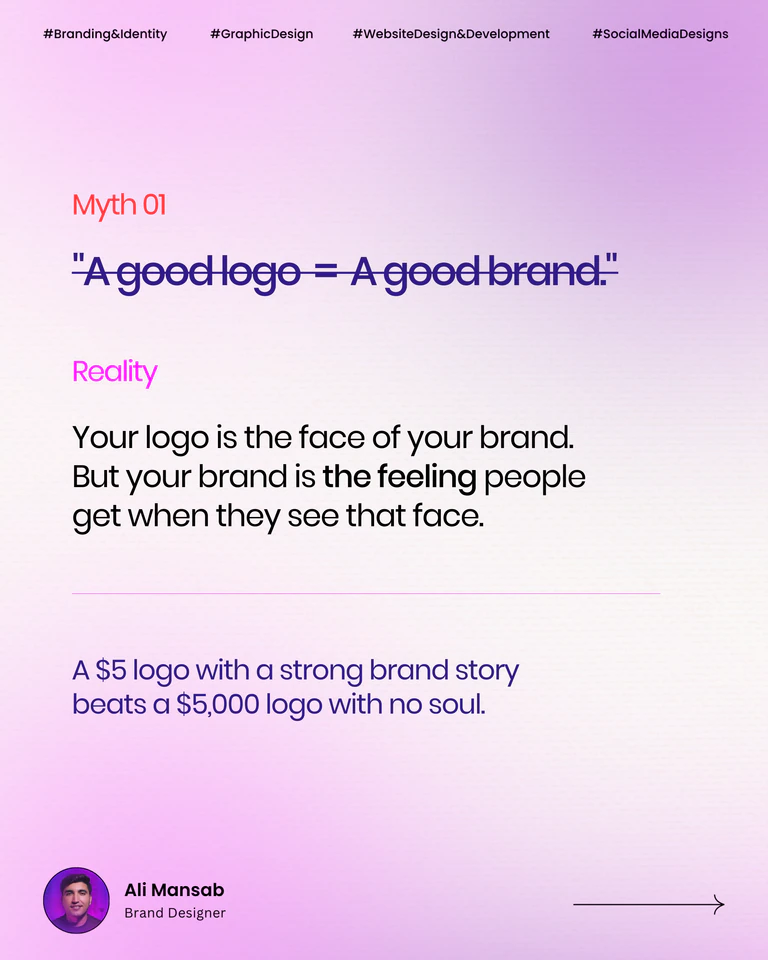
Myth 1. A good logo equals a good brand
A logo feels like a natural starting point because it’s the first thing you can see and sign off on. It helps people recognize you, but it can’t explain your offer or make your onboarding feel organized. Buyers form an impression from all of those things together. Creat8ve’s visual identity work for reBranx shows how the same identity can carry from a logo into social posts and other design assets.
Try this. Read the first screen of your homepage, a recent proposal and your welcome email side by side. Do they describe the same kind of client and set the same expectations? A hypothetical operations consultant might replace “Make work flow better” with “I help growing agencies fix project handoffs” and then show what happens in the first week. Once the message holds together, use the brand identity checklist to decide which visual assets you actually need.
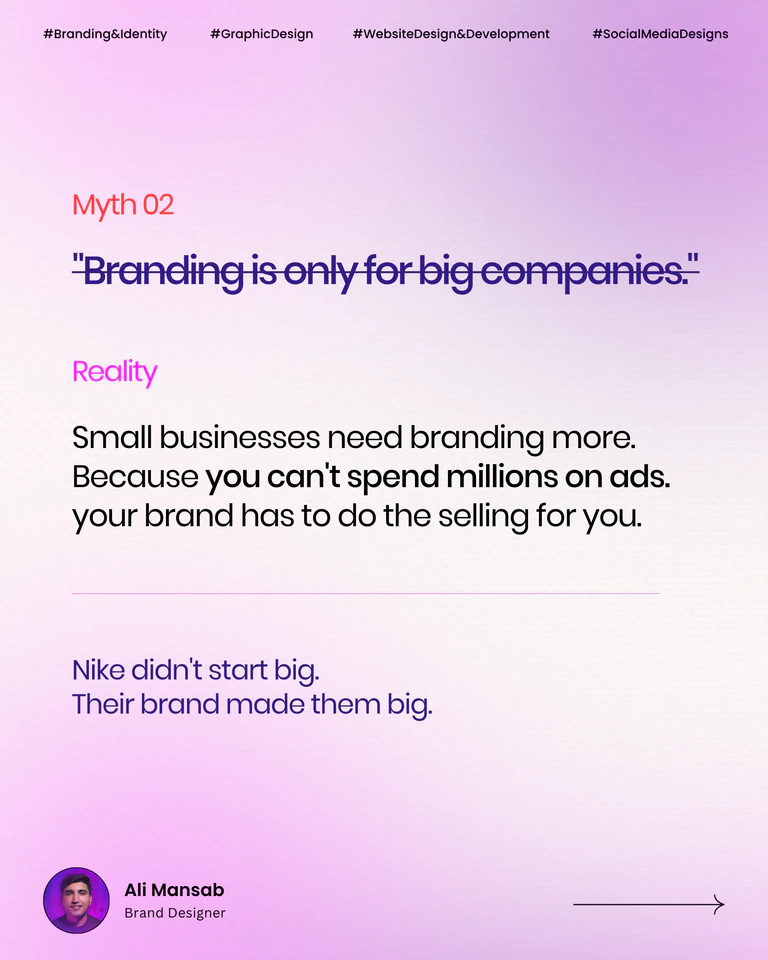
Myth 2. Branding is only for big companies
Big launches make branding look expensive. A small firm usually has a simpler problem to solve. When a client recommends you, can they describe your work in one sentence? If the referral lands on your website, will they recognize the service they just heard about? A Journal of Brand Strategy article on small-business branding myths discusses why treating branding as a luxury can narrow how founders think about it.
Try this. Ask two or three past clients how they would introduce you to someone. Look for the language they use to describe the problem that brought them to you. If a coach hears “I needed help managing people for the first time,” that’s a useful line to test on a service page. Start with the places a buyer is likely to see together, such as your LinkedIn profile, service page and proposal.
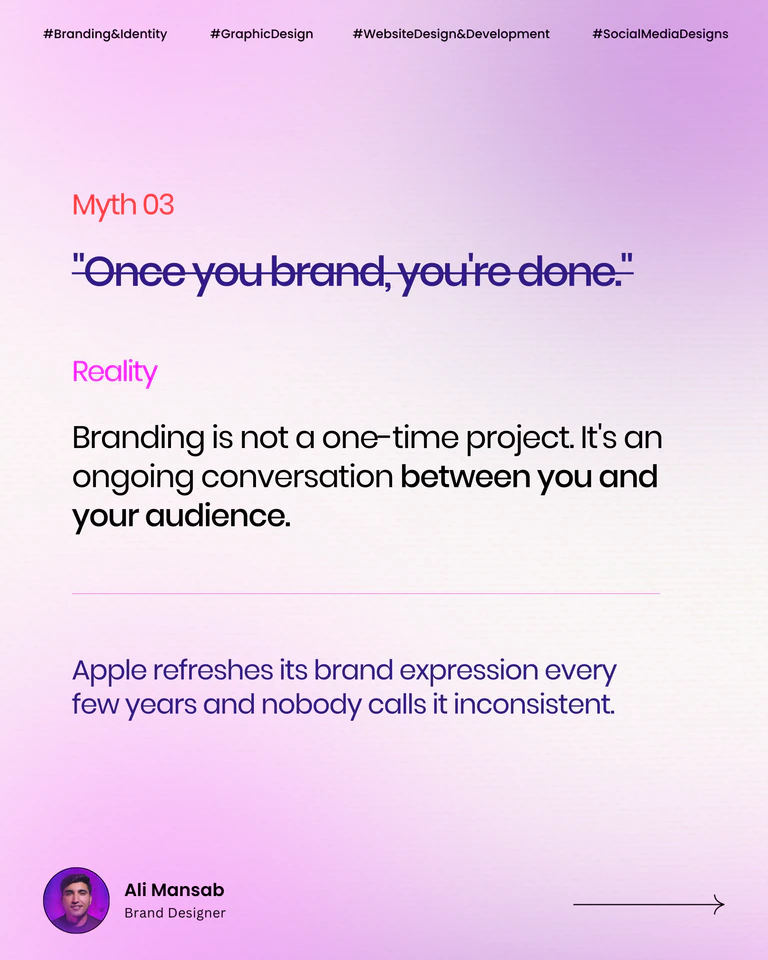
Myth 3. Once you build a brand, you’re done
A finished identity gives you a set of choices you can reuse. The trouble starts when the business changes and the materials keep describing an earlier version of it. A studio that now leads with ongoing retainers might still show one-off projects on its homepage and send every inquiry the old proposal.
Try this. After a meaningful change in your offer or audience, look at the pages and documents buyers see first. Keep the visual elements people already recognize if they still work. Update the examples, descriptions and next steps where they describe services you no longer lead with. In the studio example, a short explanation of what’s included each month would do more for a prospective client than a fresh color palette.
Myth 4. Just copy what’s trending
Trends give you a quick reference when “make it feel modern” is the whole brief. Copy enough of them, though, and a buyer comparing three firms may see the same headline, same gradient and same vague promise on every site. A visual trend is useful when it helps your reader notice or understand something that matters to their decision.
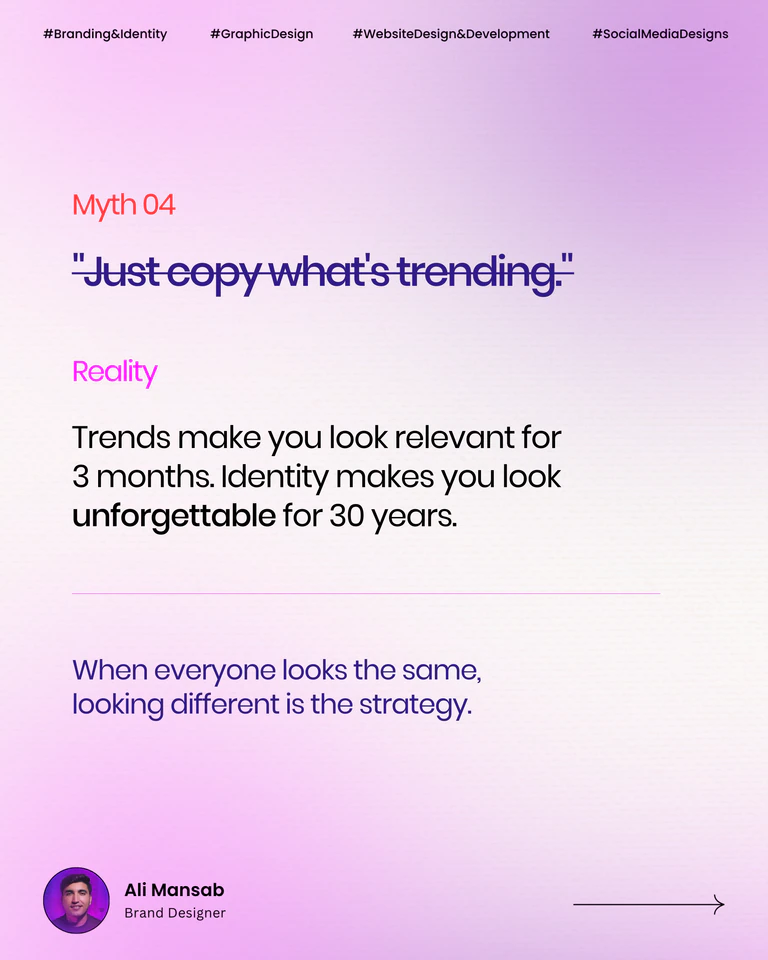
Try this. Open three sites a prospective client might compare with yours. Write down what each makes clear about its audience, process and proof. Then pick one difference you can actually show. A hypothetical HR consultancy that specializes in post-merger onboarding could put a sample transition plan on its service page. Give that plan enough space and readable type before deciding whether the page needs any motion.
Myth 5. Lower prices mean more clients
A discount is tempting when a few proposals go quiet. Price can be the issue, but a prospect may also be unsure about scope, timing or the risks of switching providers. Cutting the fee leaves those questions open. The U.S. Small Business Administration’s market research guide suggests finding out what potential clients pay for alternatives, a useful starting point before changing your prices.
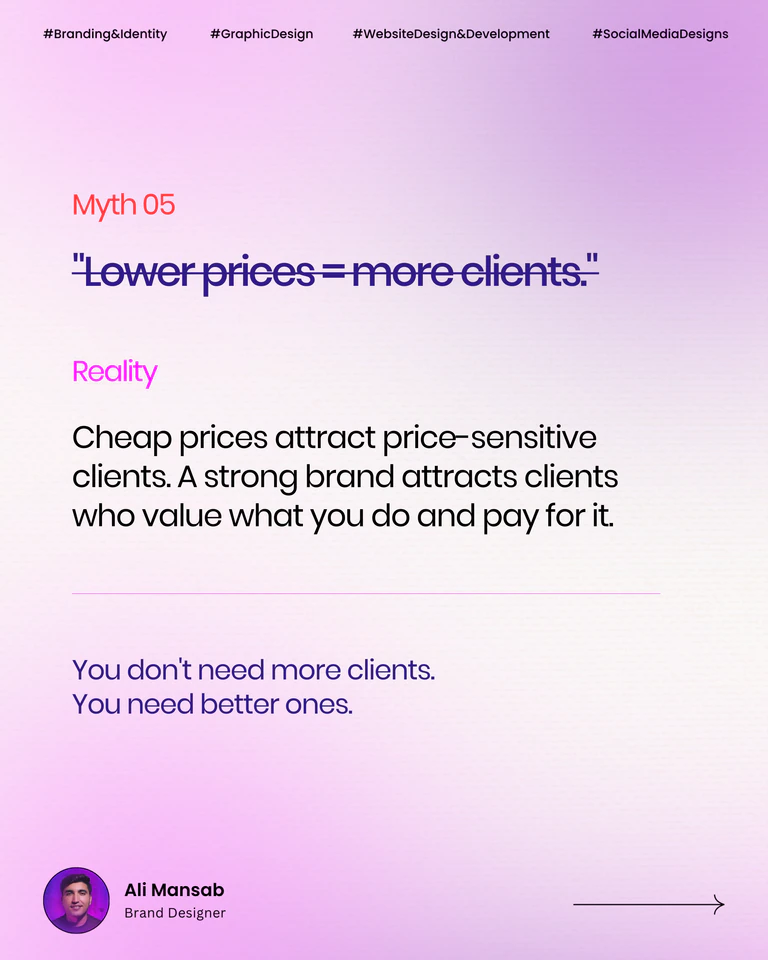
Try this. Review your last few qualified inquiries and note the questions people asked before deciding. A hypothetical web studio might discover that buyers keep asking who moves their content. Clarifying which pages are migrated, who writes new copy and how launch support works gives buyers a better basis for comparing proposals. If several buyers need less work, test a smaller scope with a clear fee and boundaries.
What a strong brand does for a service business
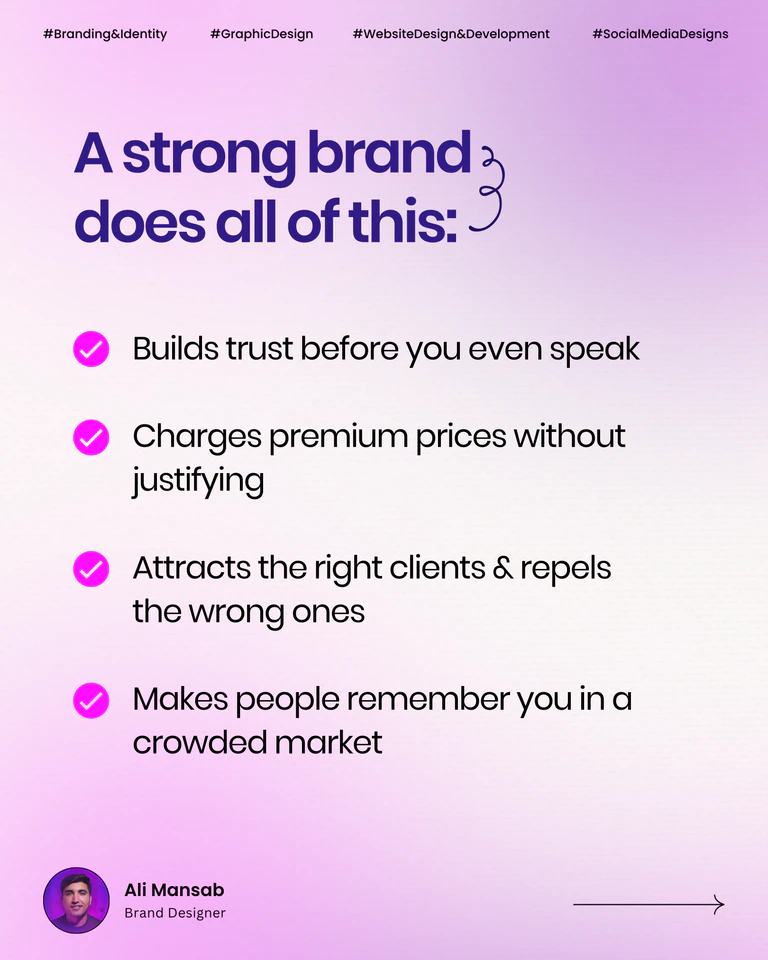
It gives buyers something specific to remember and repeat. They can tell whether your offer fits, see examples of how you work and understand what the fee includes. An identity helps those signals look like they come from the same business. Following through on the promise is what makes them credible.
Start with one part of the buying journey
- Pick a real inquiry. Start with a referral, a LinkedIn profile visit or a visit to a service page. Follow the route a buyer took to contact you.
- Find the first unanswered question. Look for a missing audience, scope, example or next step. Use an actual question from a recent conversation if you have one.
- Fix that gap and check the handoff. Make the answer easy to find and check that your proposal or booking page continues the same story.
If you find the same gaps across several pages, use these signs your website needs a redesign to decide whether to update a few pages or rethink the whole buyer journey.
If your offer has evolved and your website or sales materials still tell the old story, explore Creat8ve’s branding and identity service to see how strategy and design can work together.
PASS IT ON
Share it on Social
Brand Identity Checklist: Essential Guide for New Businesses
The essential identity elements every new business needs, from logos and typography to a consistent brand presence.
5 Signs Your Business Website Needs a Redesign
Five signs your website is getting in the way of good inquiries, plus a practical way to decide whether it needs a refresh or a redesign.